
"Thought Is Free"
If our thoughts are free, do we exercise them freely?

Sometimes a single line of writing lingers long after you’ve read it. Shakespeare’s “thought is free” is one of those lines for me — quiet yet powerful, reminding us that even in a world full of noise and pressure, there’s a space within us no one else can touch.
I first came across this quote in high school, and it’s stayed with me ever since. It made such an impression that at eighteen, I even considered getting it tattooed. (I didn’t — but the thought was tempting!)
Lately, since joining Substack just a few weeks ago, the line has resurfaced in my mind. Writing my own pieces and reading the words of others has reminded me of the beauty and freedom of thought itself. This essay is a reflection on that inner space — on freedom, imagination, and the quiet strength that comes from protecting your assertions.
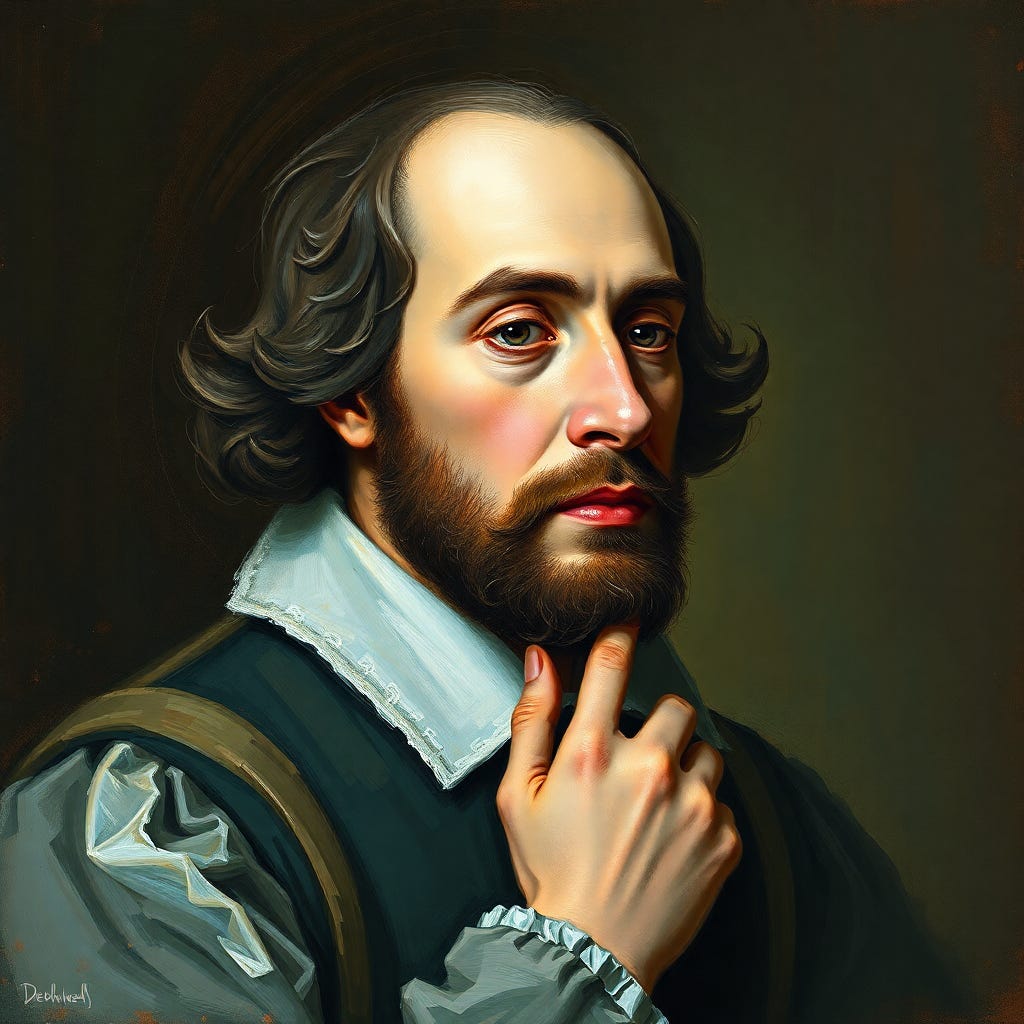
“Thought is free.”
A simple line from Shakespeare — fleeting in dialogue, yet infinite in meaning.
Those three words carry an entire world within them. They remind us that, no matter what binds us externally — expectations, opinions, obligations, or even laws — there exists one place no one can touch: our mind.
The Freedom Within
This idea isn’t new. Long before Shakespeare, the Roman philosopher Cicero expressed a similar truth: “Our thoughts are free.” Across centuries and cultures, thinkers have returned to this same realization — that freedom begins not with circumstance, but within consciousness itself.
To think is to roam unbounded. No one can dictate your imagination or censor the private universe of your inner life. In a world full of surveillance, algorithms, and noise, that may be the last remaining sacred space — your mind, your beliefs, your creative spark.
Even when our outer voice is silenced, our thoughts remain ungovernable. They are the soil where resistance, invention, and healing grow.
Beyond the Surface
On the surface, “thought is free” feels self-evident — But the deeper meaning lies in how we use that freedom.
If our thoughts are free, do we exercise them freely? Or do we hand them over to the pressures of others — social media opinions, family expectations, or the quiet fear of being misunderstood?
Freedom of thought is not merely a right; it’s a responsibility. It asks us to stay awake, curious, and willing to challenge inherited beliefs. It calls us to think creatively, to question kindly, and to guard our inner world against the corrosion of conformity.
Because the truth is — while no one can take your thoughts from you, the world will constantly try to shape them.
The Private Sanctuary
Shakespeare’s words remind us that mental autonomy is a refuge. When life feels noisy or uncertain, your thoughts can become a sanctuary — a place where you build strength, hope, and perspective.
Your imagination can become a workshop for new ideas.
Your reflection can become a mirror for self-awareness.
Your private thoughts can be both a rebellion and a retreat — an act of quiet resistance in a world that constantly demands performance.

A Special Kind of Freedom
While this is clearly a philosophical piece, I hope you also find it inspirational. Maybe you’re even as moved as I was by the quote, you’re now considering getting it as a tattoo. (Haha, I joke - don’t do that!)
Every single day, you hold a special kind of freedom: your thoughts are yours alone.
No matter what others say, how the world changes, or how much noise surrounds you — there is always a part of you that remains untouched. Use that space wisely. Let your thoughts build rather than break, create rather than copy, imagine rather than absorb.
Doubts, opinions, and criticism may knock on your door, but they cannot enter your mind unless you invite them in. You choose what stays. You choose what grows.
Because that simple truth — thought is free — is not just a line from Shakespeare. It’s a reminder of what makes us human: our endless capacity to think, to imagine, and to choose what kind of world we create within ourselves.